
Body and Territory is a group exhibition at Matiz Gallery in Barcelona, bringing together works by Rafael Dussan, Alberto Ruiz Villar, Adam Weismann, Lori Goldberg and Alexandre Clanis. Through figurative painting, abstraction and earth-based works, the exhibition explores bodily expression, freedom and the material conditions of the places we inhabit.
Rafael Dussan’s paintings provide the central narrative, bringing Caribbean landscapes and colonial histories into dialogue with questions of sovereignty. The other artists extend this conversation through gesture, geometry, material and landscape.
The exhibition is the third chapter of BASPcr — Barri de l’Art Sant Pere, Santa Caterina i la Ribera, a cultural laboratory initiated by Matiz Gallery. Emerging from psychogeographic research developed in 2024 with support from the Institut de Cultura de Barcelona (ICUB), BASPcr connects exhibitions, intercultural exchange and research into the neighbourhood where the gallery operates.
Body, expression and freedom
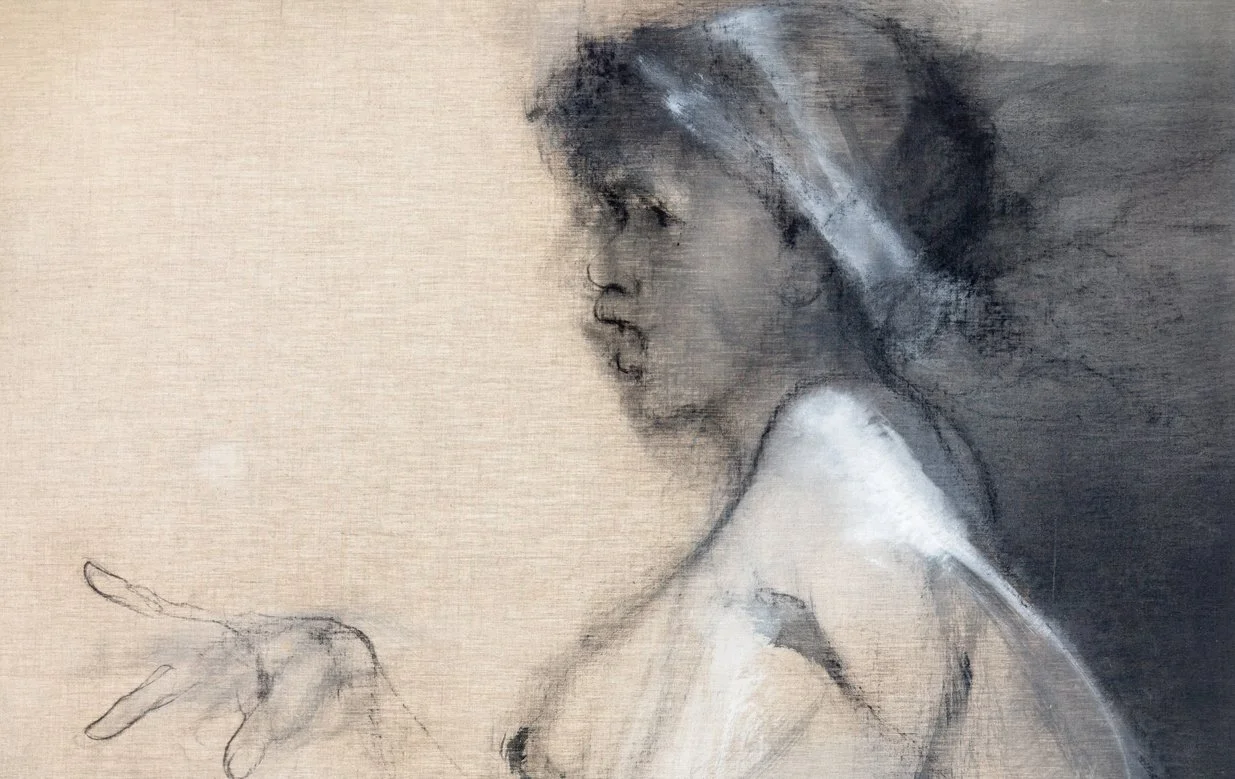
Drawing and the human figure are central to Colombian artist Rafael Dussan’s practice. Delicate contours, expressive hands and passages of dense colour give his scenes a poetic intensity. Recurring bodies, gestures and landscapes build a narrative across the paintings, leaving the relationships between figures open.
Latin American magical realism provides a context for encountering this imagery. Familiar Caribbean landscapes and everyday gestures coexist with mysterious movement, unusual scales and esoteric presences. The histories accompanying the works bring this poetic world into contact with religious persecution, colonial authority, enslavement and struggles for freedom.
These histories introduce bodily sovereignty: the freedom to make decisions about oneself, express desire and inhabit one’s body on one’s own terms. Sensuality, dance, playfulness and rest give that freedom an everyday presence, raising questions about the circumstances in which people can gather, take pleasure and express themselves.
Territory and the conditions of freedom
The Caribbean landscapes surrounding these narratives bring attention to the environments that sustain life. Mangroves, waterways and places of shade introduce questions of food, shelter, environmental knowledge and refuge. Regional histories of Indigenous water management and agriculture, alongside the struggles of autonomous communities resisting slavery, offer a context for understanding how knowledge of a place supports collective life.
Territory connects bodily sovereignty with its material conditions: access to resources, the transmission of knowledge and the organisation of shared spaces. Shade and rest add another dimension through the spaces and time available for a body to recover and exist beyond the demands of work.
Artistic dialogue
Alberto Ruiz Villar approaches territory through geometry, stratification and mark-making. His work brings attention to the pictorial surface as a place of accumulated traces, tension and material memory.
Adam Weismann works with raw earth and vernacular building techniques. His unfired clay works connect artistic practice with the materials and knowledge through which people construct their surroundings, continuing a dialogue developed in the preceding BASPcr exhibition, Encuentro Material.
Lori Goldberg introduces abstract and atmospheric approaches to landscape. Colour, gesture and composition explore how a place can be perceived and felt, extending the exhibition towards the experience of its surroundings.
Alexandre Clanis brings the body into the exhibition through the act of painting. Working with surfaces laid on the floor, he develops traces through repeated gestures, contact and the removal of material. Rhythms and variations preserve bodily movement across the surface, giving time a visible form. Informed by his architectural training, his practice introduces territory at the scale of bodily action: a surface traversed, marked and transformed through movement.
BASPcr research and publication
Mesa III accompanies the development of the social and political section of BASPcr’s psychogeographic study.
The research maps community networks, neighbourhood and migrant associations, material conditions and cultural participation. It examines decision-making across neighbourhood, district, municipal and wider administrative levels, identifying the actors and institutions that shape local possibilities.
The planned publication will make this work available to residents, cultural agents and others seeking to understand and act within the territory. Publication details and availability will be announced here.
BASPcr 2025–2026
The programme develops through four connected chapters. Among Us opened the cycle through exchange, hospitality and independent cultural work. Encuentro Material explored materials, vernacular knowledge and urban history. Body and Territory turns towards contemporary cultural presence and the conditions of collective life.
The fourth chapter, Espacio como Ensayo, will examine how Matiz Gallery can act within its immediate surroundings, connecting its interior, its relationship with the street and the practical conditions of cultural intervention.
For further information, private visits or enquiries about available works, contact Matiz Gallery.