Onírico 2

€4,200.00

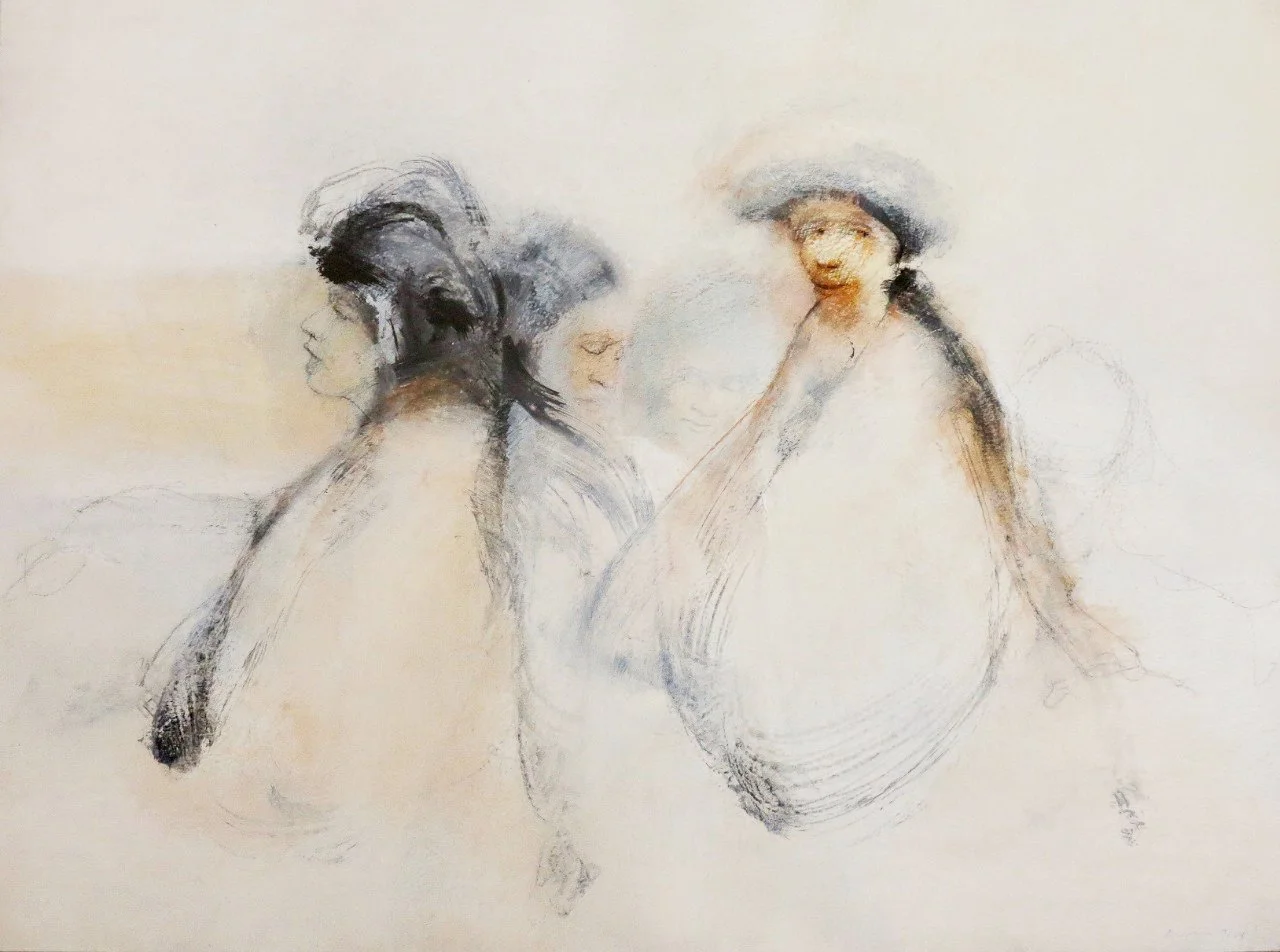
Onírico 2 presents three human figures emerging from a delicate atmosphere of translucent pigments, charcoal and pastel. Their bodies appear suspended within the pale surface of the paper, with faces turned in different directions and contours that alternate between definition and dissolution. Dark charcoal strokes establish the figures' hair, gestures and silhouettes, while subtle touches of ochre and muted blue introduce warmth and depth.

Dussan's drawing reflects his engagement with the classical Italian tradition of figurative representation, alongside expressive qualities reminiscent of Egon Schiele and Francisco Goya. The figures retain a strong physical presence despite their fragmented and almost weightless appearance. Through this balance between observation and imagination, the painting evokes a dreamlike space where individual identities, memories and bodily gestures coexist without forming a fixed narrative.

BASPcr — Territorial–Curatorial Connection

Within BASPcr Mesa III — Body and Territory, we bring the painting's grouping of distinct yet closely situated figures into dialogue with our research on the population and social relationships of Sant Pere, Santa Caterina i la Ribera. The study documents a neighbourhood inhabited by people of diverse geographical origins and residential trajectories, while examining the conditions that shape their participation in collective life. This curatorial connection opens a reflection on the difference between sharing a territory and developing meaningful relationships within it, considering how cultural spaces might contribute to encounters, mutual recognition and the formation of a shared neighbourhood life.

64 × 49 cm

Acrylic, charcoal, pigments and pastel on laid paper.

Original artwork accompanied by a certificate of authenticity.

This piece is part of the Contrastes exhibition at Matiz Gallery in 2024, Barcelona. The painting features a horizontal composition on light beige linen. Jordi Artigas's abstraction and artistic identity are evident in this work, where he employs recurring motifs like X shapes or arrows, symbols of his personal visual language. The use of coffee creates unique textures in the background, over which strong, bold black strokes serve as the central characters, developing a sculptural and calligraphic language. The palette primarily consists of earthy tones, with occasional fluorescent and vibrant hues adding contrast and dynamism.