Afrodita Caribe — La danza (2023) is an original painting by Colombian artist Rafael Dussan, measuring 125 × 65 cm, available through Matiz Gallery in Barcelona. Dussan’s practice centres on drawing and the expressive possibilities of the human body. Here, a reclining Afro-descendant woman rests above mangrove roots, surrounded by birds, smaller figures and a scene of movement. Fine outlines and translucent colours give the composition a delicate, poetic character, with darker shading concentrated around the figures on the right.
The woman’s reclining posture gives the painting an openly sensual quality. Around her, flamingos and figures with birdlike features introduce a playful, enigmatic atmosphere. The scene brings recognisable elements of Caribbean life into an imaginative arrangement, allowing everyday experience and the extraordinary to coexist. This is the context of magical realism through which the exhibition approaches the work, leaving its individual symbols open.
Mangroves and flamingos belong to the actual landscapes of the Caribbean. Around Cartagena, the Ciénaga de la Virgen and La Boquilla offer a geographical reference for this encounter: mangrove waterways support diverse wildlife, and flamingos have been documented in the lagoon. These places help ground the painting’s imagery without identifying it as a depiction of one particular location.
The reclining body also opens a conversation about shade and rest. In a hot climate, shade creates the conditions for pausing, gathering and spending time together. Architecture gives these needs spatial form through courtyards, covered galleries and the zaguán, a sheltered entrance passage connecting the street with the interior of a house. Cartagena’s courtyard architecture demonstrates how buildings can respond to heat through the organisation of shelter, air and outdoor space.
Within the exhibition, this relationship between the body and its surroundings brings rest into the discussion of freedom: having time for oneself, enjoying bodily pleasure and inhabiting a place without being continually put to work. The painting’s sensuality and playfulness allow these questions to enter through an everyday gesture of repose.
The wider Caribbean history of resistance gives shelter another significance. People escaping colonial slavery established palenques, communities whose autonomy depended on settlement, subsistence and knowledge of the surrounding territory. Their histories connect freedom with the practical ability to sustain and defend collective life. Against this background, the exhibition brings shade and refuge into conversation with rest and bodily sovereignty, without fixing the painting to a single historical episode.
The work is presented in Cuerpo y territorio (Body and Territory), the third exhibition in BASPcr, Matiz Gallery’s programme connecting art, intercultural exchange and research into its surrounding neighbourhood. The exhibition explores the body as a means of expression and territory as the material and political conditions in which we live.
In Barcelona’s Sant Pere, Santa Caterina i la Ribera, these questions concern how communities express themselves, gather and find space for everyday life. They also involve understanding who governs those spaces and who has access to them. Alongside dance and movement, this painting brings attention to the resting body. Within BASPcr, the freedom to express oneself extends to the freedom to pause, take pleasure and occupy a place—questions that connect cultural life with the capacity to organise and transform our surroundings.
Afrodita Caribe — La danza (2023) is an original painting by Colombian artist Rafael Dussan, measuring 125 × 65 cm, available through Matiz Gallery in Barcelona. Dussan’s practice centres on drawing and the expressive possibilities of the human body. Here, a reclining Afro-descendant woman rests above mangrove roots, surrounded by birds, smaller figures and a scene of movement. Fine outlines and translucent colours give the composition a delicate, poetic character, with darker shading concentrated around the figures on the right.
The woman’s reclining posture gives the painting an openly sensual quality. Around her, flamingos and figures with birdlike features introduce a playful, enigmatic atmosphere. The scene brings recognisable elements of Caribbean life into an imaginative arrangement, allowing everyday experience and the extraordinary to coexist. This is the context of magical realism through which the exhibition approaches the work, leaving its individual symbols open.
Mangroves and flamingos belong to the actual landscapes of the Caribbean. Around Cartagena, the Ciénaga de la Virgen and La Boquilla offer a geographical reference for this encounter: mangrove waterways support diverse wildlife, and flamingos have been documented in the lagoon. These places help ground the painting’s imagery without identifying it as a depiction of one particular location.
The reclining body also opens a conversation about shade and rest. In a hot climate, shade creates the conditions for pausing, gathering and spending time together. Architecture gives these needs spatial form through courtyards, covered galleries and the zaguán, a sheltered entrance passage connecting the street with the interior of a house. Cartagena’s courtyard architecture demonstrates how buildings can respond to heat through the organisation of shelter, air and outdoor space.
Within the exhibition, this relationship between the body and its surroundings brings rest into the discussion of freedom: having time for oneself, enjoying bodily pleasure and inhabiting a place without being continually put to work. The painting’s sensuality and playfulness allow these questions to enter through an everyday gesture of repose.
The wider Caribbean history of resistance gives shelter another significance. People escaping colonial slavery established palenques, communities whose autonomy depended on settlement, subsistence and knowledge of the surrounding territory. Their histories connect freedom with the practical ability to sustain and defend collective life. Against this background, the exhibition brings shade and refuge into conversation with rest and bodily sovereignty, without fixing the painting to a single historical episode.
The work is presented in Cuerpo y territorio (Body and Territory), the third exhibition in BASPcr, Matiz Gallery’s programme connecting art, intercultural exchange and research into its surrounding neighbourhood. The exhibition explores the body as a means of expression and territory as the material and political conditions in which we live.
In Barcelona’s Sant Pere, Santa Caterina i la Ribera, these questions concern how communities express themselves, gather and find space for everyday life. They also involve understanding who governs those spaces and who has access to them. Alongside dance and movement, this painting brings attention to the resting body. Within BASPcr, the freedom to express oneself extends to the freedom to pause, take pleasure and occupy a place—questions that connect cultural life with the capacity to organise and transform our surroundings.

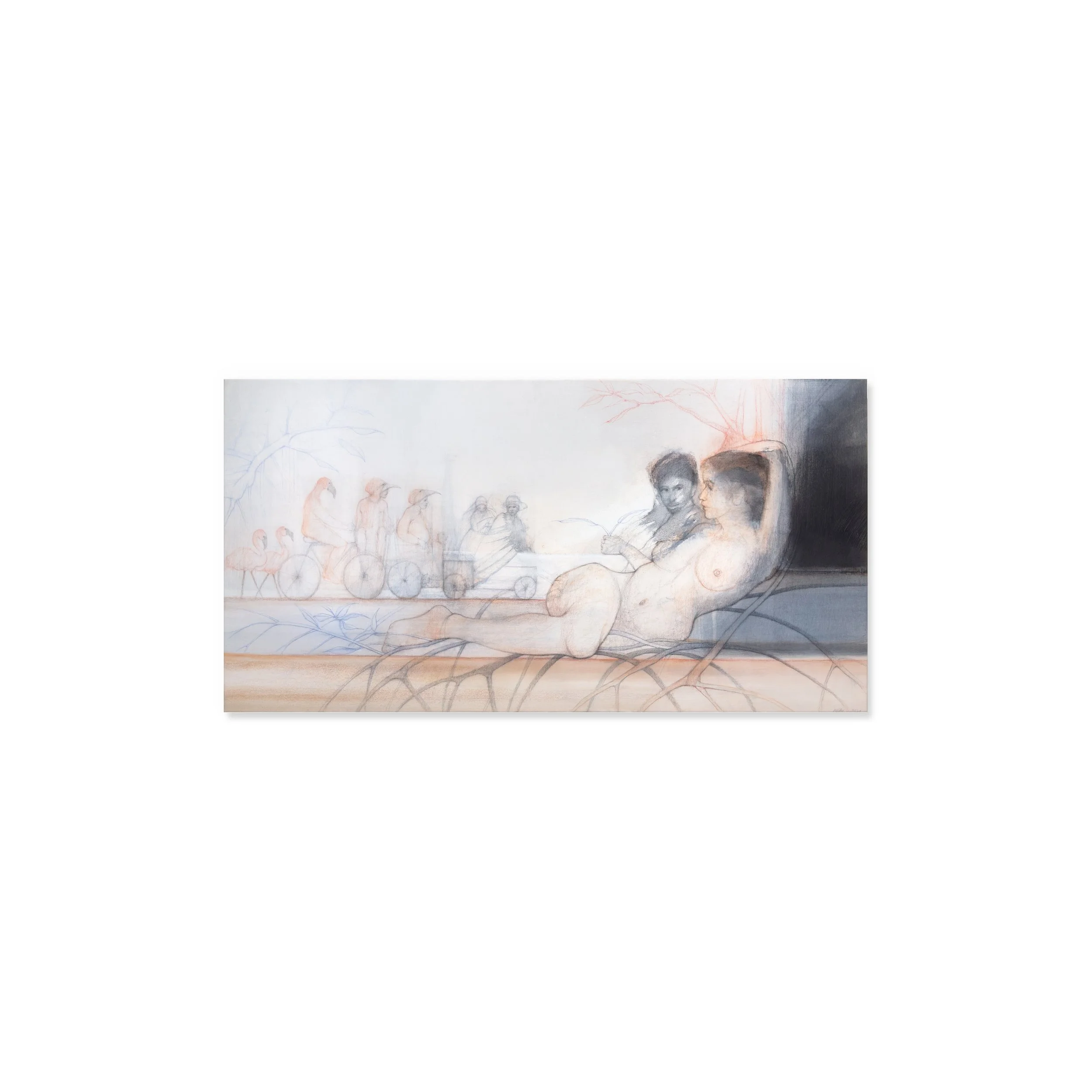 Image 1 of 3
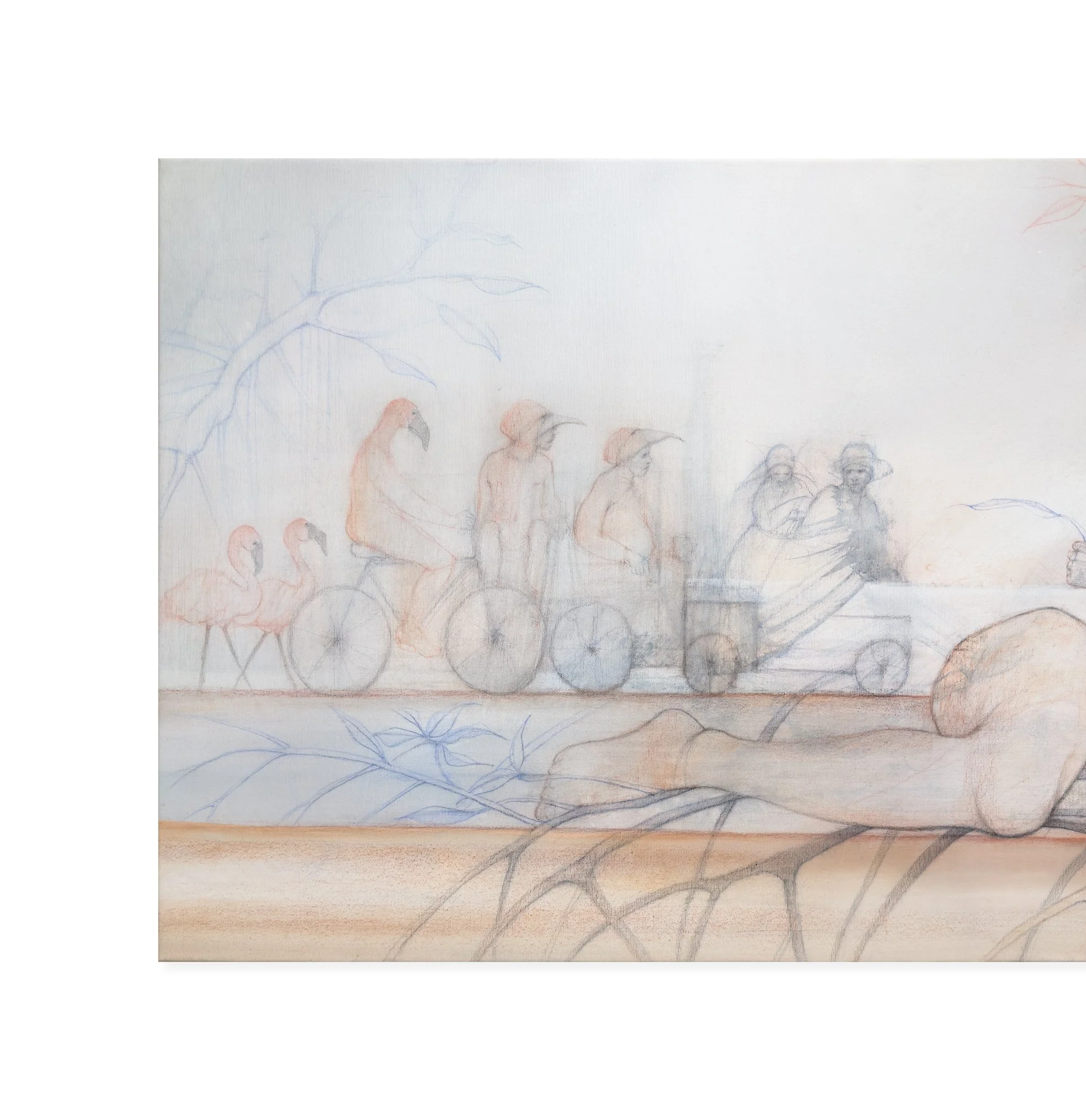 Image 2 of 3
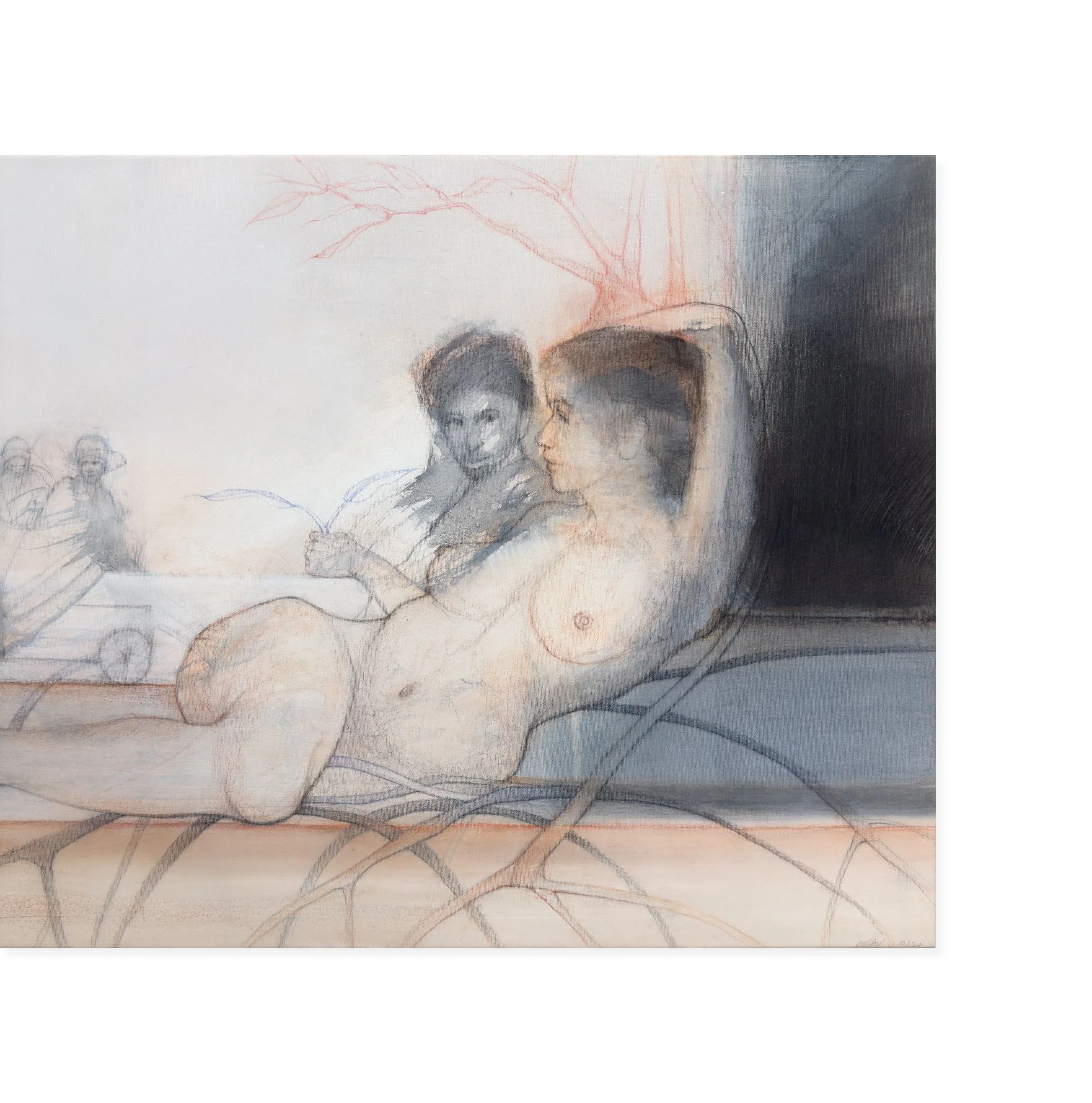 Image 3 of 3