
 Image 1 of 5
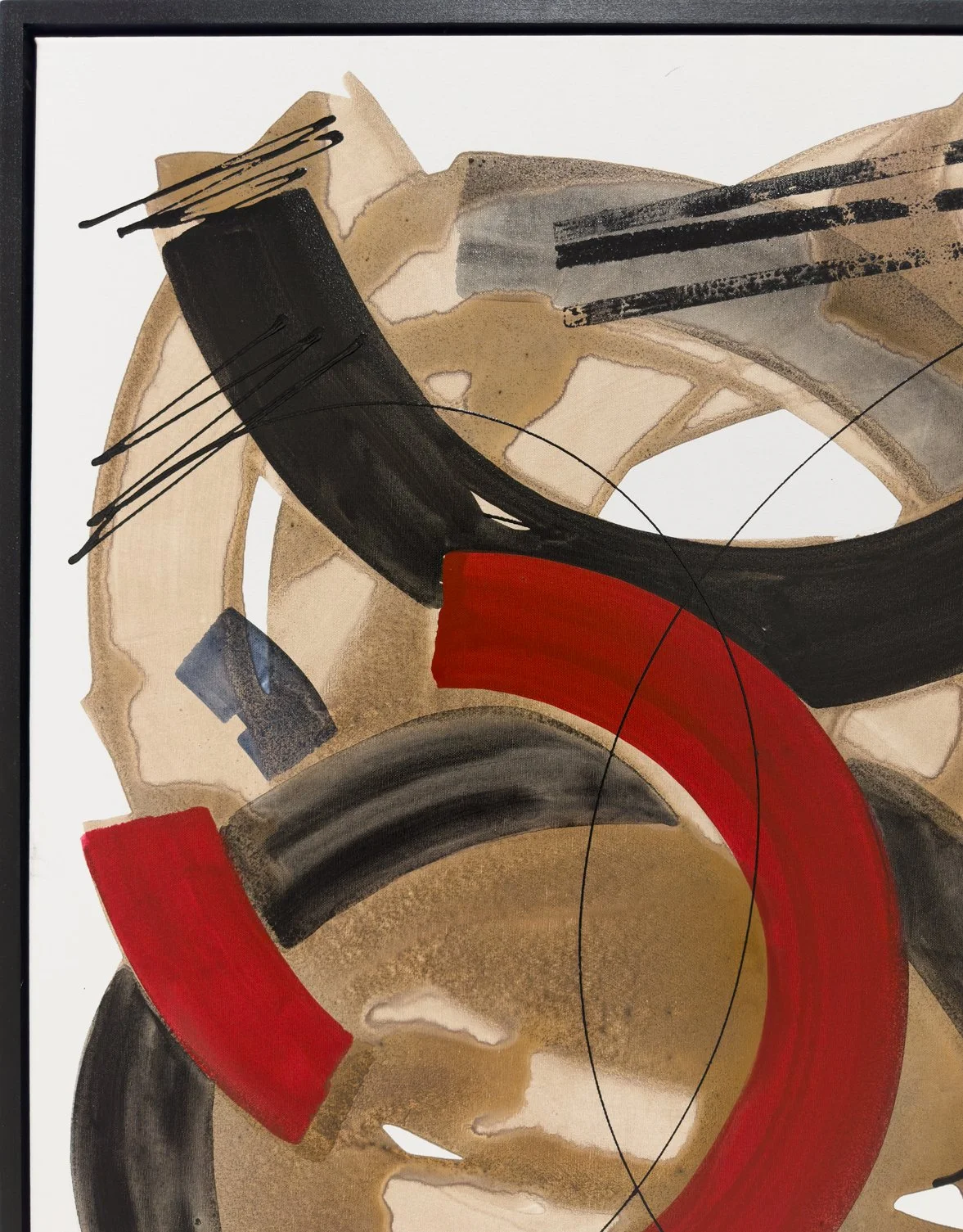 Image 2 of 5
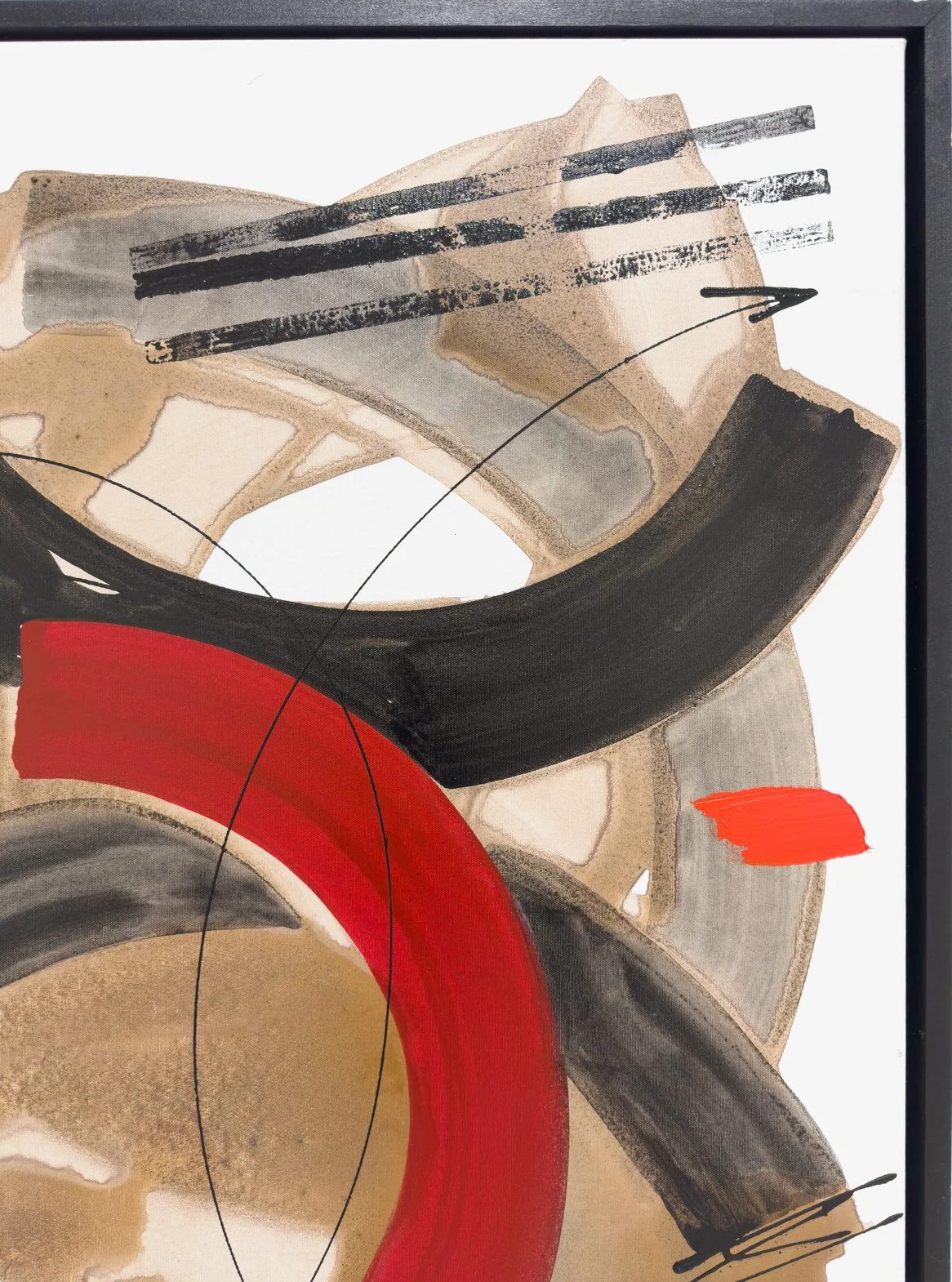 Image 3 of 5
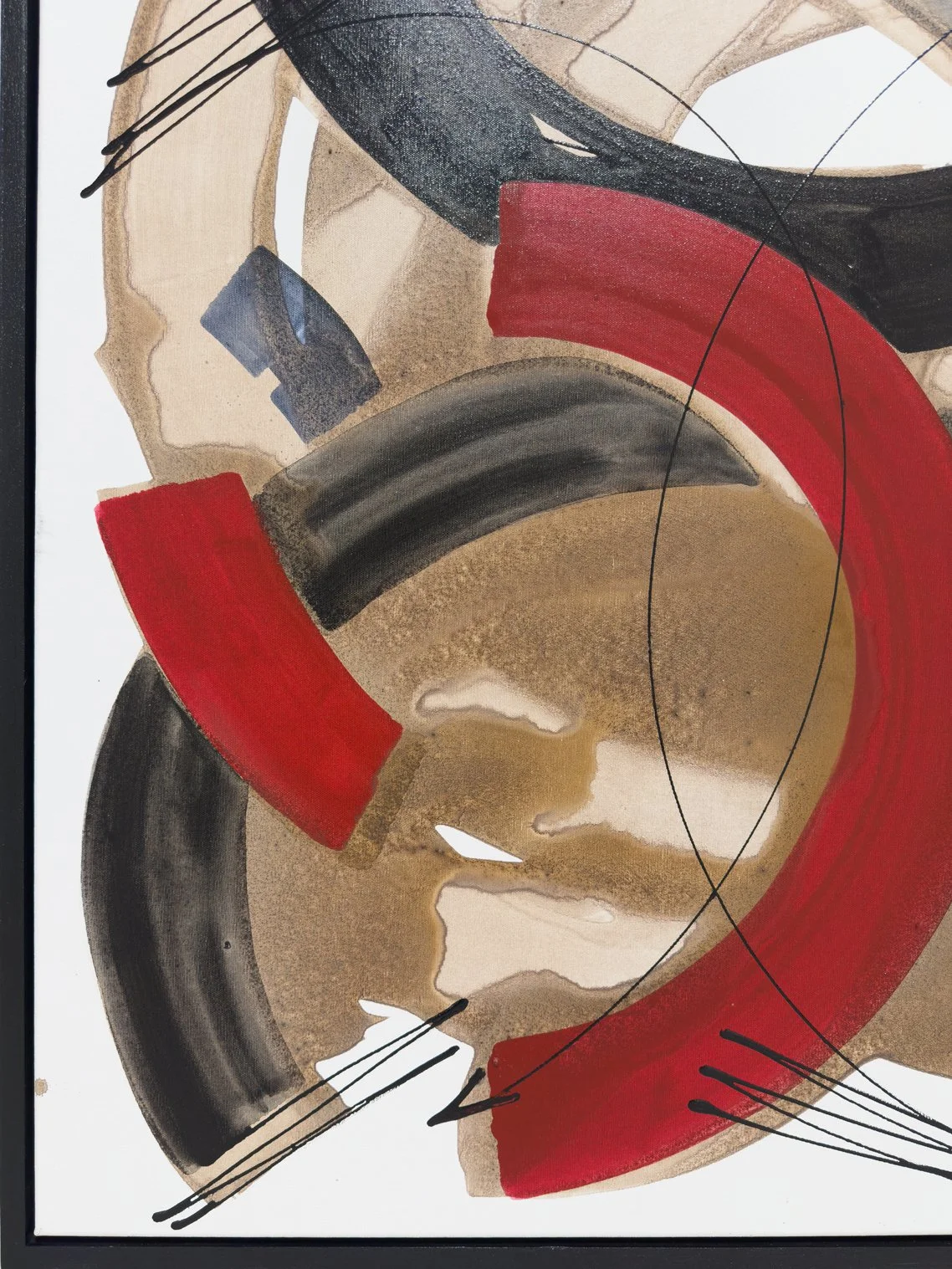 Image 4 of 5
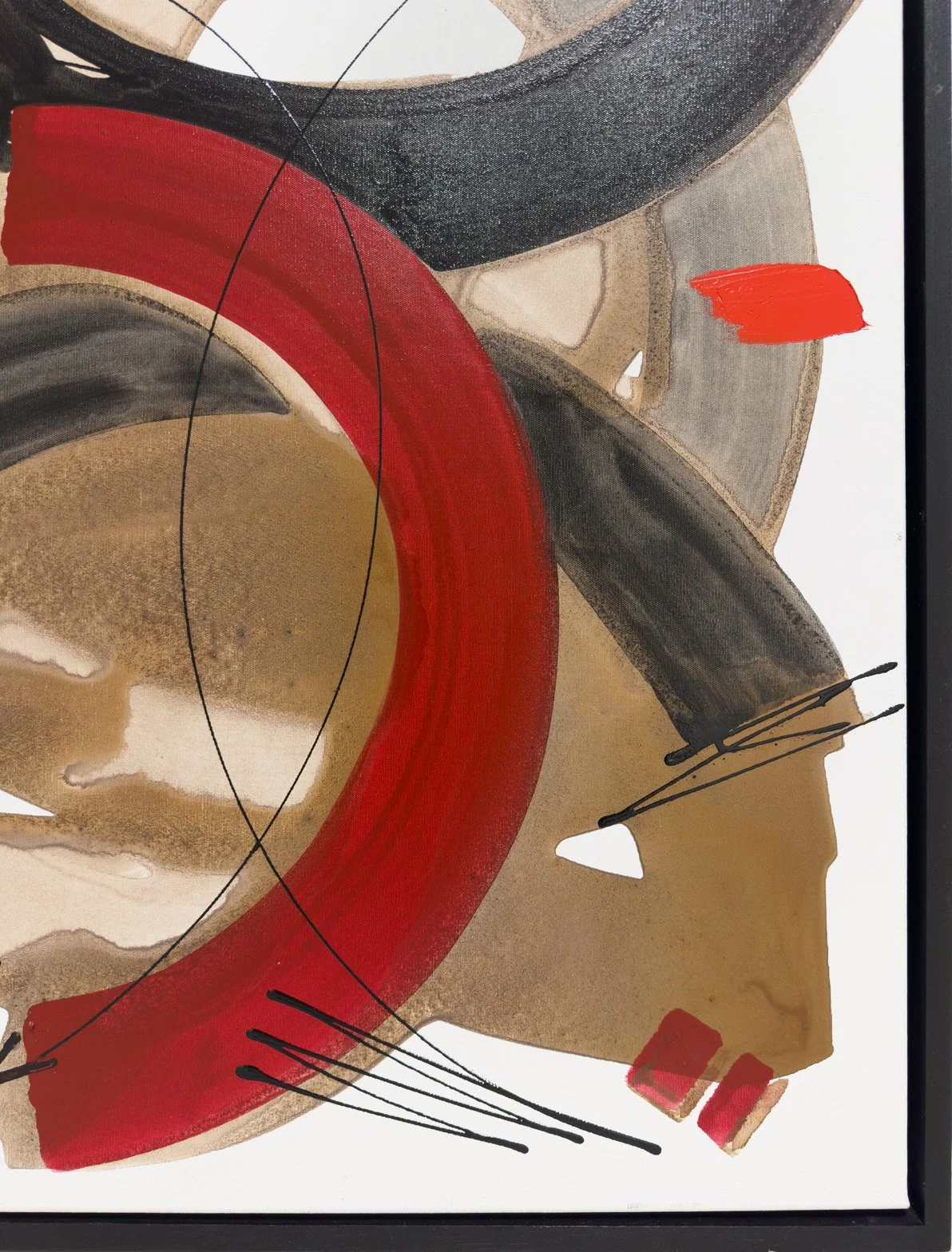 Image 5 of 5
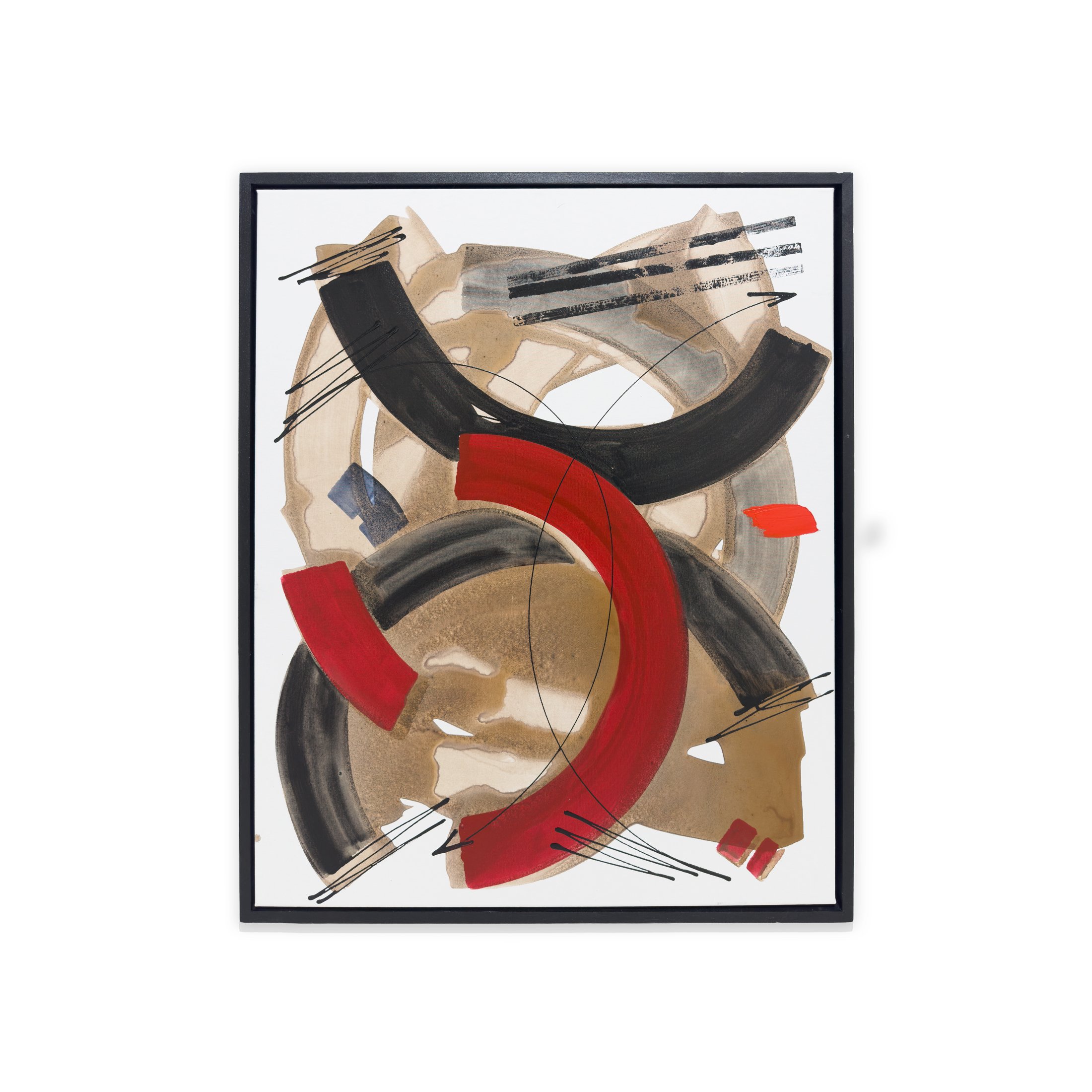
This painting is part of our next Spring exhibition 2026. Jordi Artigas structured this composition around two balanced, rounded gestures — a red stroke and an overlapping black stroke — whose intensity places them firmly in the foreground of the painting. Their curved movement establishes the primary rhythm and visual weight of the composition.
Behind them, additional strokes operate on a secondary plane: a black gesture that partially dissolves into the background, merging with layers of coffee and brown pigments, and a smaller red stroke which, despite its chromatic intensity, recedes spatially due to its scale. This controlled play between foreground and background creates depth without relying on illusionistic space.
The painting is developed on a white-painted canvas, allowing the material layers to remain legible and distinct. The composition is finally unified through symbolic arrow-like marks, which introduce direction, movement, and a sense of internal navigation across the surface.
Artigas’s use of gesture as sign and his restrained symbolic vocabulary places his work in dialogue with Antoni Tàpies and Antonio Saura, while his emphasis on balance, rhythm, and reduction also resonates with modern symbolic abstraction, particularly artists such as Paul Klee and Joan Miró. These references emerge not as citation, but as shared concerns with sign, structure, and compositional clarity.
The emphasis on material process and time-based transformation in Artigas’s work closely aligns with BASPcr’s methodology, where cultural meaning is built gradually through lived processes, accumulated traces, and spatial reading, rather than through instant or illustrative visual statements.
86 X 105 cm
Coffee, inks, acrylic pigments and oil on canvas, wood frame (Prices excl. VAT)
Painting from Jordi Artigas 2026
This painting is part of our next Spring exhibition 2026. Jordi Artigas structured this composition around two balanced, rounded gestures — a red stroke and an overlapping black stroke — whose intensity places them firmly in the foreground of the painting. Their curved movement establishes the primary rhythm and visual weight of the composition.
Behind them, additional strokes operate on a secondary plane: a black gesture that partially dissolves into the background, merging with layers of coffee and brown pigments, and a smaller red stroke which, despite its chromatic intensity, recedes spatially due to its scale. This controlled play between foreground and background creates depth without relying on illusionistic space.
The painting is developed on a white-painted canvas, allowing the material layers to remain legible and distinct. The composition is finally unified through symbolic arrow-like marks, which introduce direction, movement, and a sense of internal navigation across the surface.
Artigas’s use of gesture as sign and his restrained symbolic vocabulary places his work in dialogue with Antoni Tàpies and Antonio Saura, while his emphasis on balance, rhythm, and reduction also resonates with modern symbolic abstraction, particularly artists such as Paul Klee and Joan Miró. These references emerge not as citation, but as shared concerns with sign, structure, and compositional clarity.
The emphasis on material process and time-based transformation in Artigas’s work closely aligns with BASPcr’s methodology, where cultural meaning is built gradually through lived processes, accumulated traces, and spatial reading, rather than through instant or illustrative visual statements.
86 X 105 cm
Coffee, inks, acrylic pigments and oil on canvas, wood frame (Prices excl. VAT)
Painting from Jordi Artigas 2026