ADAM WEISMANN
Claymoon — Hand formed artworks
Photography by Jonny Pickup
Adam Weismann is a material practitioner whose work explores the architectural, sensory, and temporal qualities of clay.
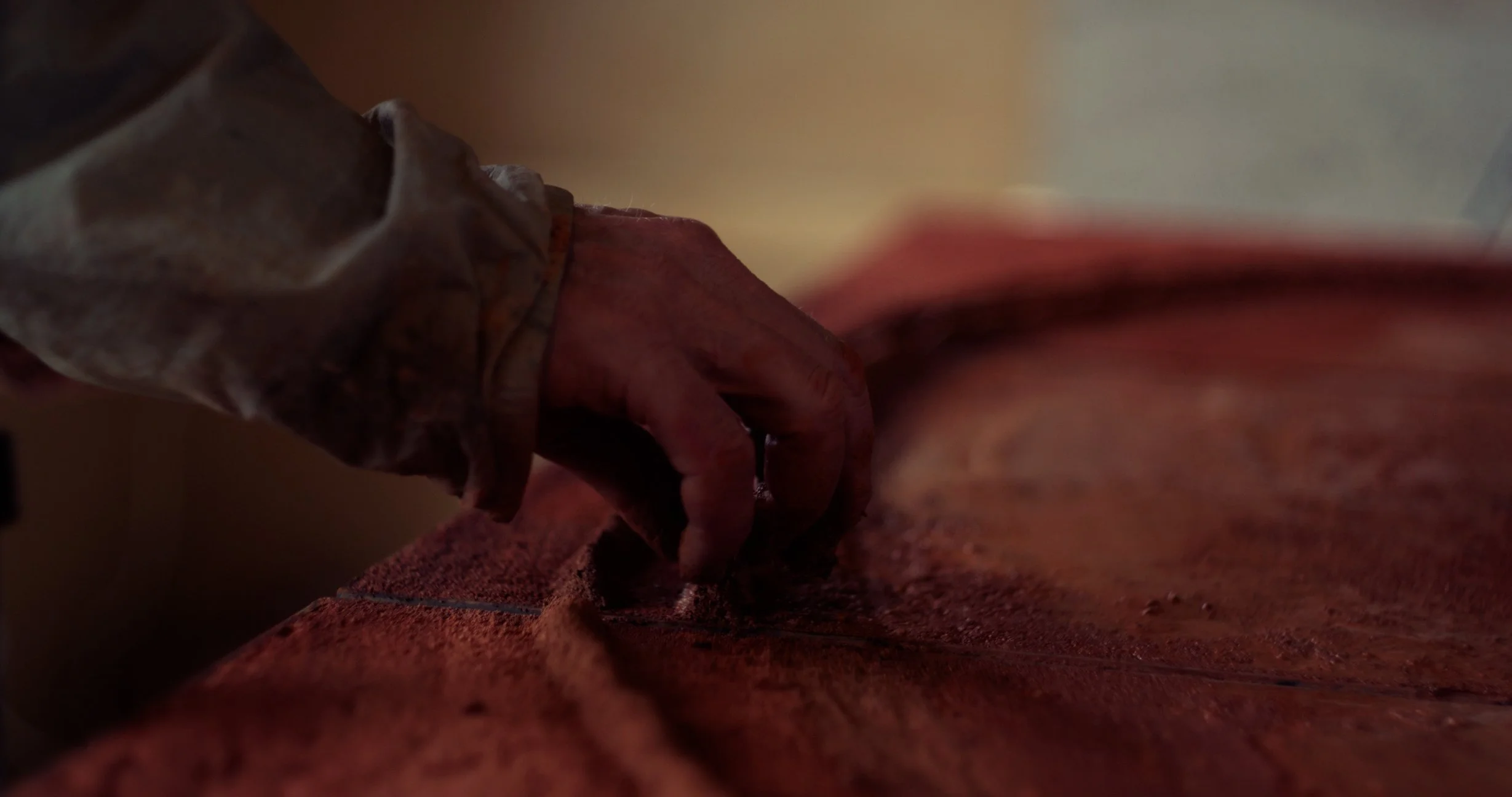
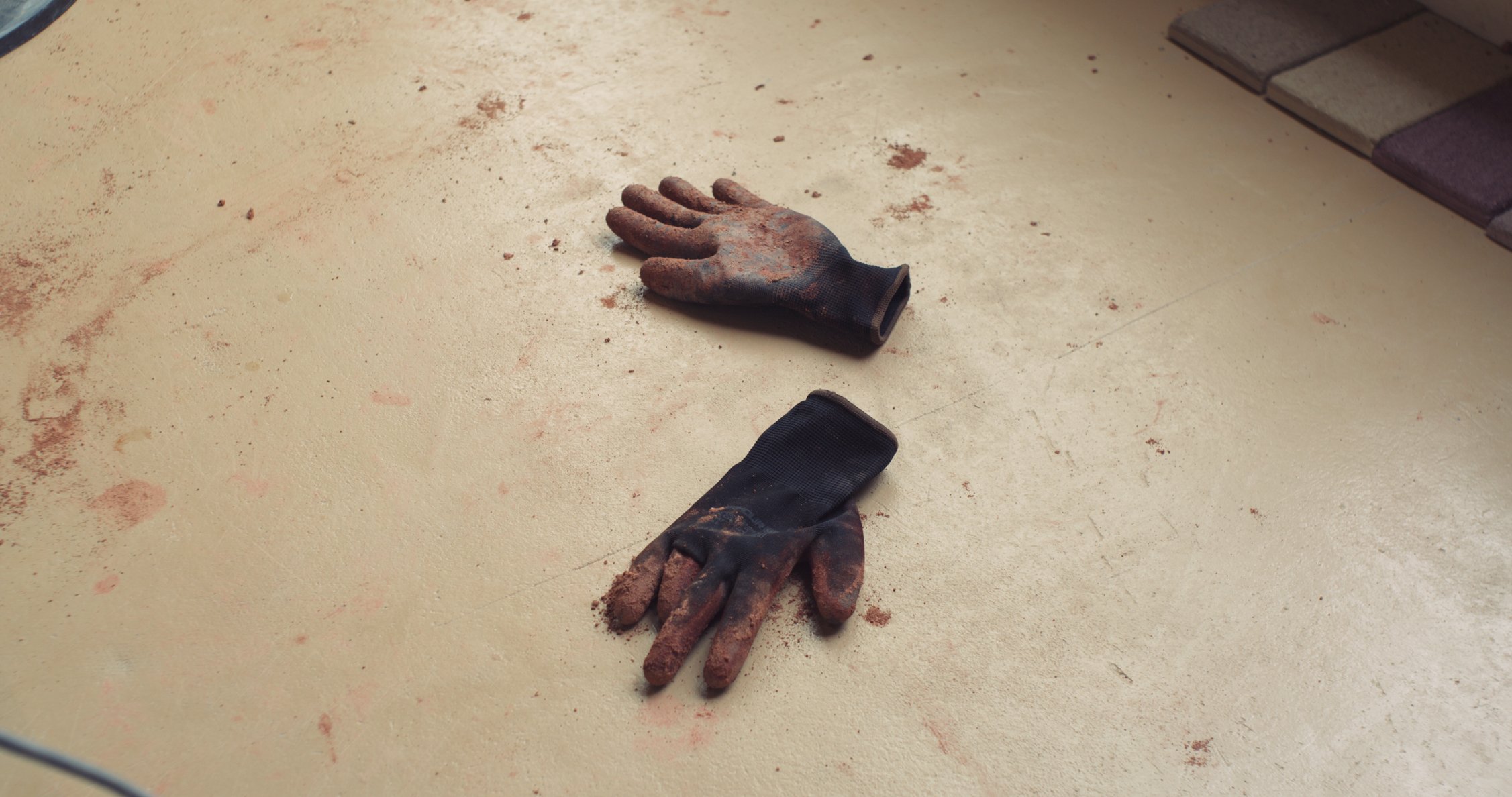
Claymoon, by Adam Weismann and studio, is an ongoing body of hand-formed works in which clay, earth, wood, stone, and mineral pigments are shaped into contemplative objects. The series engages with material memory, slowness, and place, emphasising process, tactility, and the subtle ways materials organise how spaces are perceived and inhabited.
Material, Time, and Space
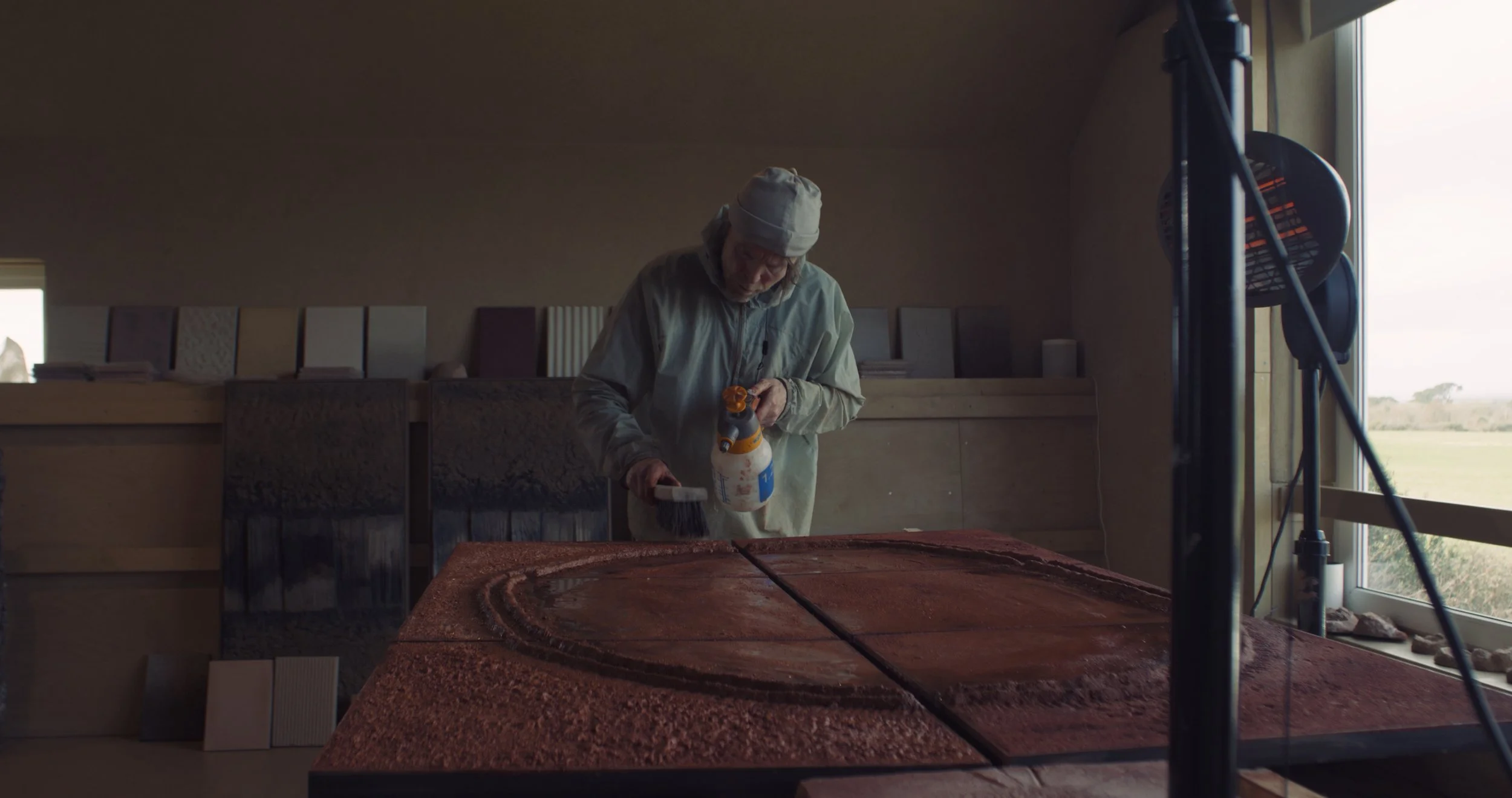
Claymoon is a sculptural, hand-formed practice through which Adam Weismann approaches clay not as a neutral medium, but as an active, formative presence. Grounded in vernacular building traditions such as rammed earth — techniques shaped collectively and passed down through time — the practice draws on long-term material engagement to explore how raw matter carries memory, duration, and place.
The works are formed slowly using earth pigments and mineral tones, and are often encased in brass or walnut structures that emphasise their monolithic, architectural presence. Rather than functioning as purely visual objects, Claymoon works operate as contemplative presences within space, subtly influencing atmosphere, perception, and rhythm.
Central to the practice is the understanding that materials shape human experience beyond function or decoration. Claymoon proposes a quieter mode of engagement, rooted in tactility, imperfection and duration, where sculpture mediates between the built environment and states of attention, reflection, and belonging.
The work does not set out to represent identity or speak on behalf of any group. Instead, it draws attention to the material processes that quietly shape how people come to feel connected — to place, to one another, and to shared ways of imagining the world. Through clay, time, and repetition, Claymoon points to the conditions that make collective belonging possible, without fixing it into symbols or narratives.
Within the framework of BASPcr, this approach resonates with forms of knowledge that emerge through self-organisation rather than authorship or spectacle. Long before institutions or formal systems, vernacular material practices shaped how communities built, inhabited, and recognised themselves. In this sense, Claymoon aligns with BASPcr’s broader inquiry into how culture, place, and social imagination are formed from the ground up.
ARTWORKS
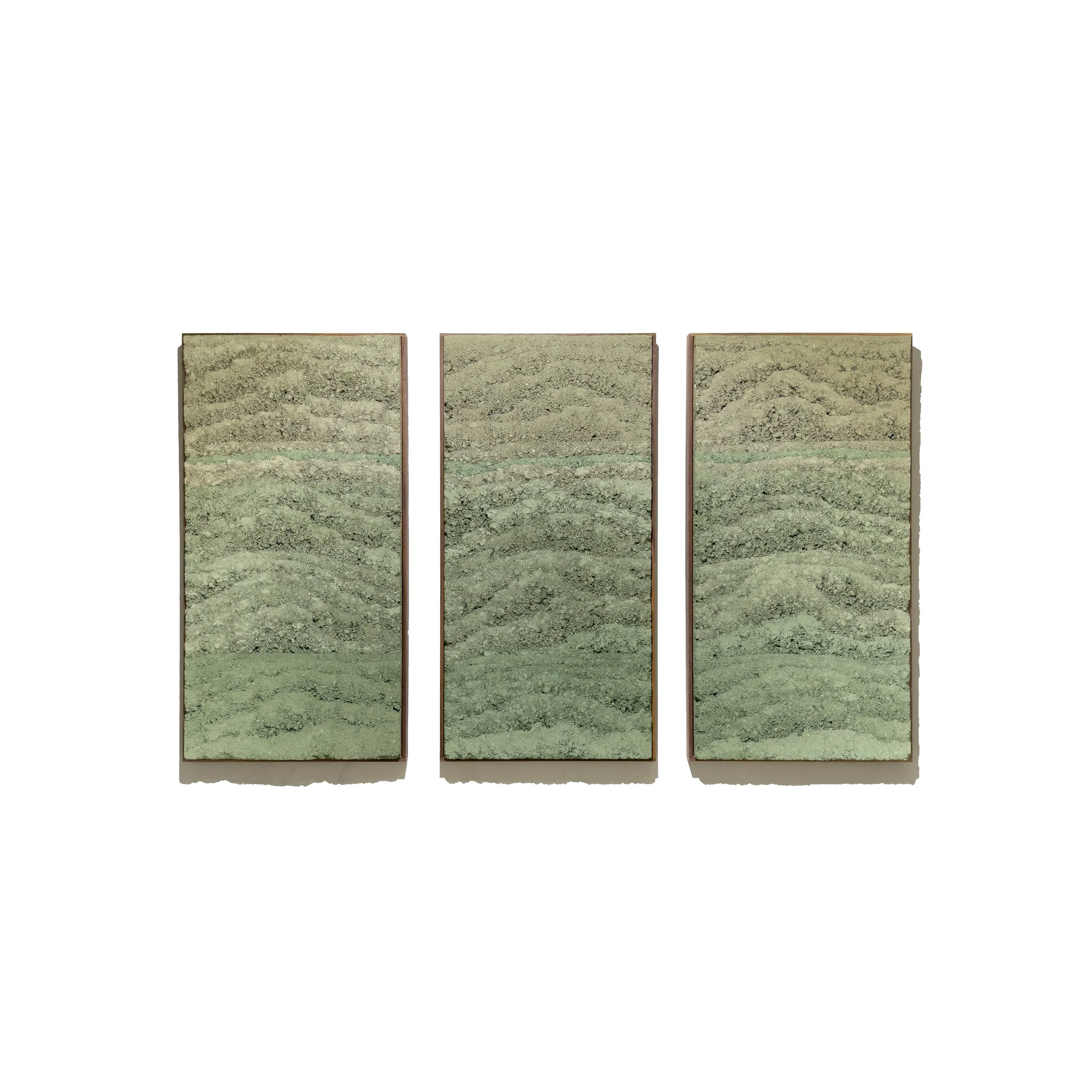
This is a triptych by Adam Weismann (Claymoon Studio), part of a wider series of eleven works. Using the vernacular technique of rammed earth, in which raw wet clay is compacted into a vertical panel, the piece explores the visual and material possibilities of compression, layering, and natural pigmentation. Subtle bands of green and mineral tones create a surface that feels at once geological and atmospheric, evoking soil, horizon, and an abstract sense of landscape. The work foregrounds the rawness of the material and its direct connection to the earth, allowing texture and pigment to carry the image.
Within BASPcr, the piece points to how vernacular techniques hold forms of knowledge and continuity through material practice, linking earth not only to construction, but to memory, inhabitation, and collective relation to place.
1230mm x 630mm x 65 mm (x3)
Unfired Clay pannels (Prices excl. VAT & shipping)
by Adam Weissman - Claymoon studio 2026
One-of-a-Kind Artwork with an Authenticity Certificate
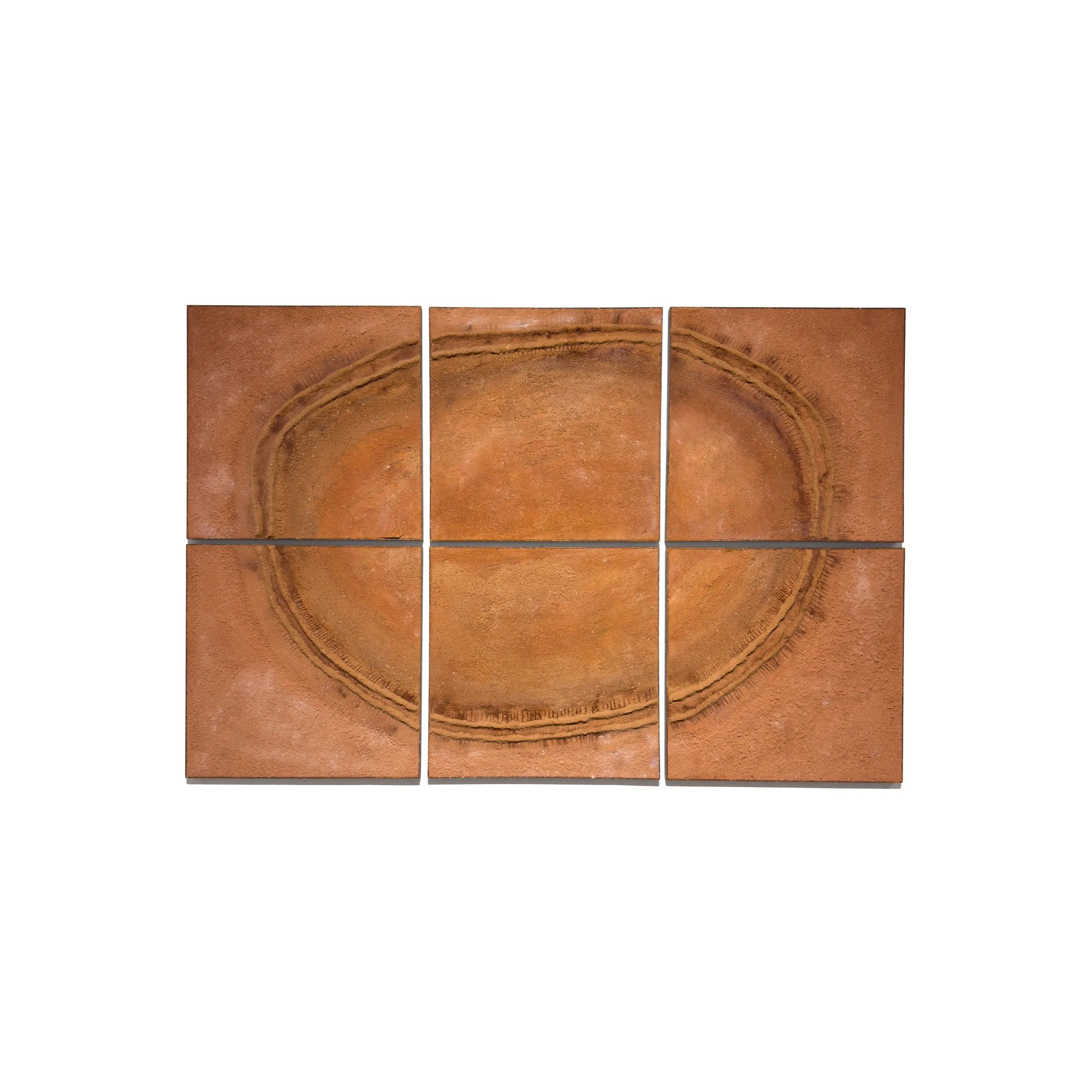
Composed of six panels in warm earthen red tones of unfired Cornwall clay, the work unfolds as a fractured circular trace spread across a grid. The circle appears not as a fixed geometric form, but as a worn imprint that emphasizes the rawness of the material and its direct relation to the earth. Marks of pressure, abrasion, and sedimentation allow the surface to register the artist’s spontaneous gestures. The work ultimately evokes a topographic fragment or aerial landscape, where the circle gathers this rawness into a form that is at once minimal, elemental, and quietly geographical.
Within BASPcr, the work opens a line of inquiry into how vernacular knowledge is carried through material practice. Earth appears here not simply as medium, but as a social and historical substrate that holds memory, gesture, and ways of inhabiting space that precede fixed borders or institutional forms of authorship.
50 × 50 cm (x6)
Unfired Clay pannels (Prices excl. VAT & shipping)
by Adam Weissman - Claymoon studio 2026
One of a kind Artwork with an Authenticity Certificate
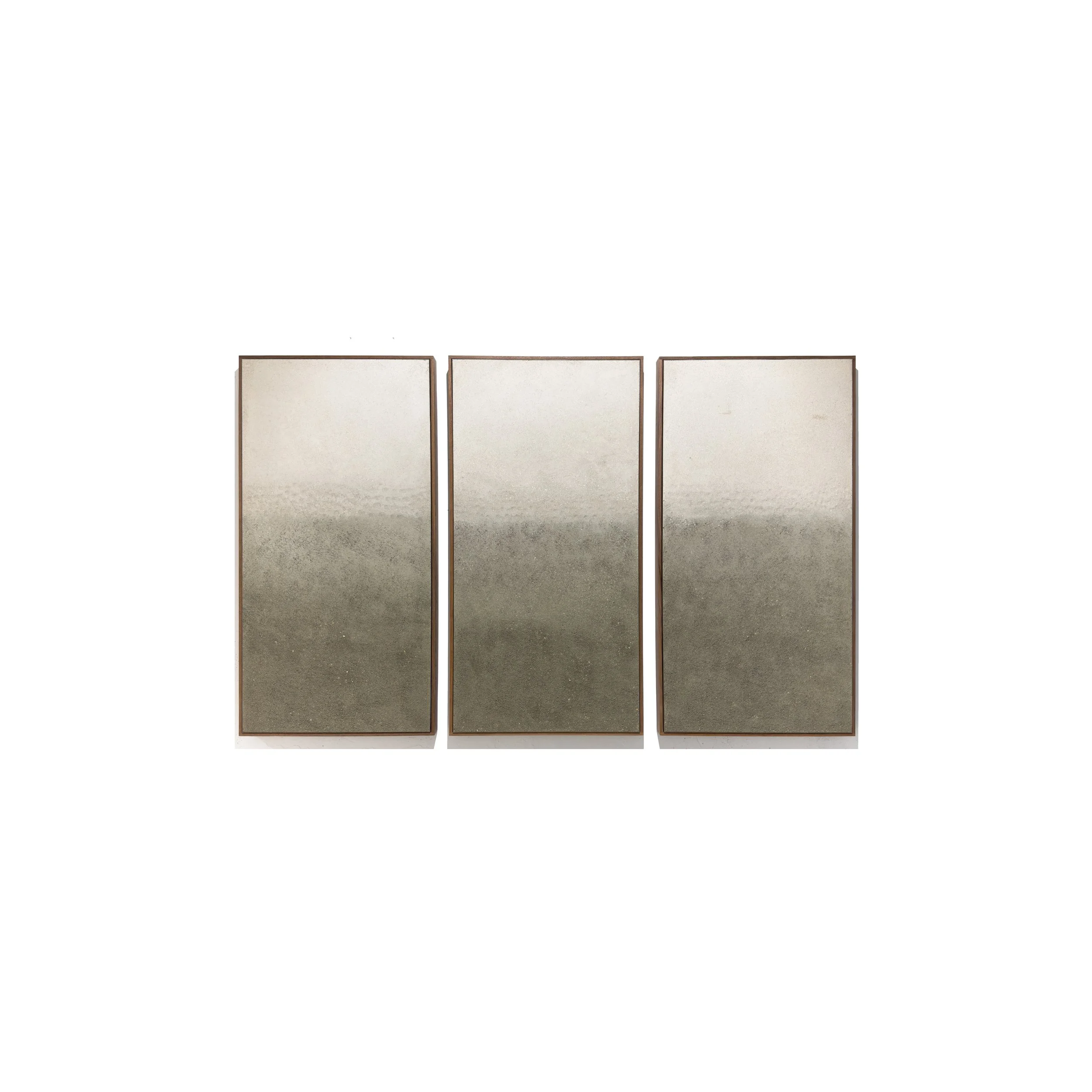
Ombre Fade explores subtle transformation through tonal shift and light. Drawing on the quiet phenomenon of a penumbral lunar eclipse, where the moon is softly dimmed rather than dramatically altered, the work captures a moment of near-imperceptible change.
Through a considered use of clay, sand, and pigment, the surface moves gently from light to shadow, evoking the translucent, atmospheric qualities of watercolour and inviting close, contemplative viewing.
Within BASPcr, Claymoon opens a quieter but essential line of inquiry: how vernacular knowledge organises itself through materials, repetition, and care. Long before institutions, borders, or formal authorship, these practices shaped how communities built, inhabited, and recognised themselves. In this sense, Claymoon does not illustrate identity — it reveals the conditions through which collective belonging becomes possible.
Adam Weismann & the Claymoon Studio are the latest addition to Matiz Gallery’s portfolio.
1230mm x 630mm x 65 mm (x3)
Clay (Prices excl. VAT & shipping)
by Adam Weissman - Claymoon studio 2023
One-of-a-Kind Artwork with an Authenticity Certificate
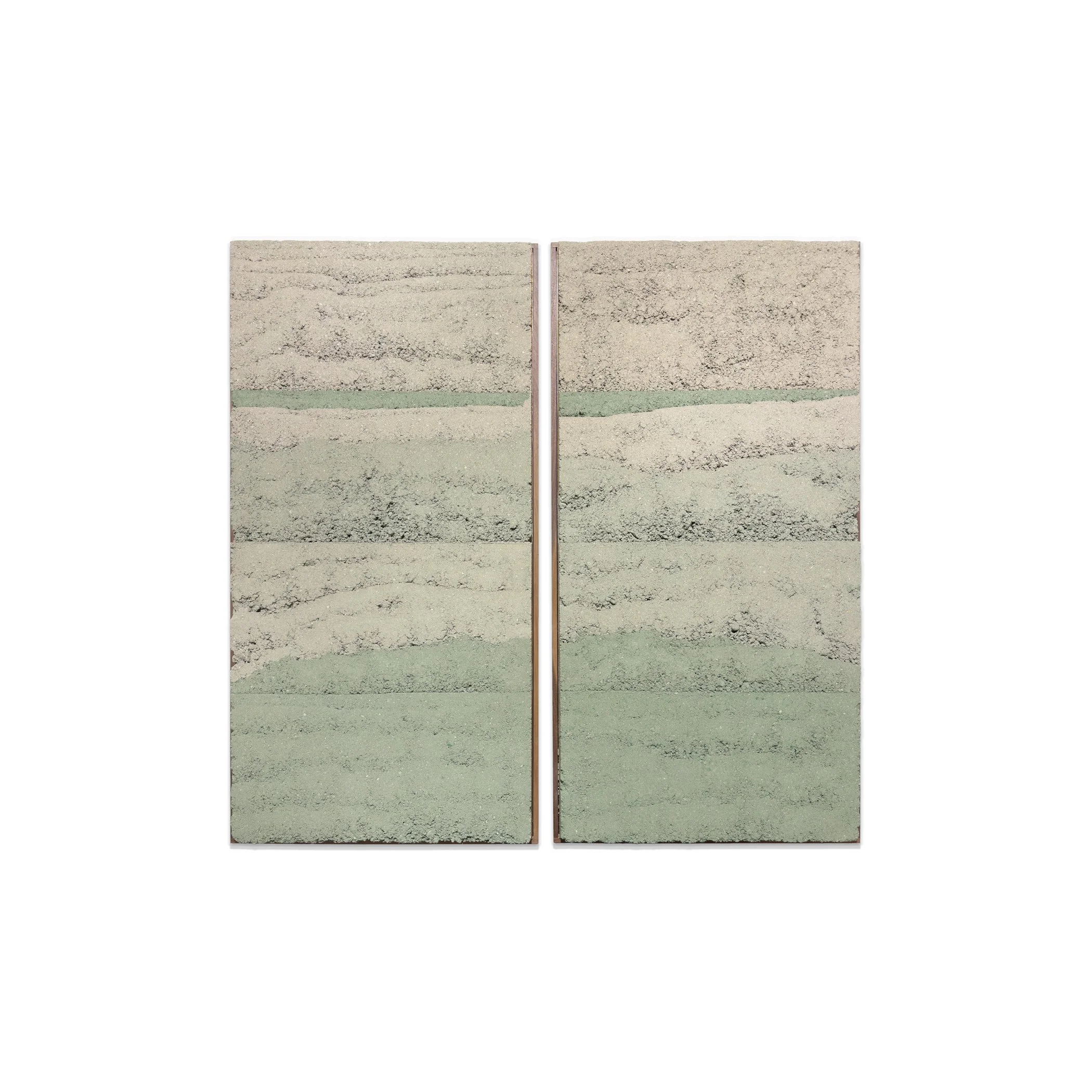
This Artwork is presented as a diptych composed of unfired clay, sand, and pigment, built through processes of compression and layering. Drawing on ancient making traditions and early unfired earth construction, the work foregrounds material density as both structure and memory. Its visible strata evoke weight, pressure, and slow geological transformation, while irregular pockets of softness and texture introduce moments of fragility within mass.
The series reflects on humanity’s earliest relationship with the earth — a quiet meditation on time, ancestry, and the enduring memory held within raw material. Rather than depicting landscape, the work operates as a material record: an accumulation shaped by repetition, touch, and gravity.
Within BASPcr, this work opens a fundamental line of inquiry into how vernacular knowledge organizes itself through material practice. Long before formal authorship, institutions, or borders, earth-based techniques shaped how communities built, inhabited, and recognized themselves. In this sense, Green Rammed Earth Series does not illustrate identity; it reveals the conditions through which collective belonging, continuity, and self-organization become possible.
Adam Weismann & the Claymoon Studio are the latest addition to Matiz Gallery’s portfolio.
1230mm x 630mm x 65 mm (x2)
Clay (Prices excl. VAT & shipping)
by Adam Weissman - Claymoon studio 2023